
Montessori education is a model that supports children’s natural curiosity, encourages individual learning, and aims to instill a sense of freedom and responsibility in students. Designing an ideal Montessori classroom to suit the cognitive, emotional, and social development of children is crucial.
1. Organization and Materials
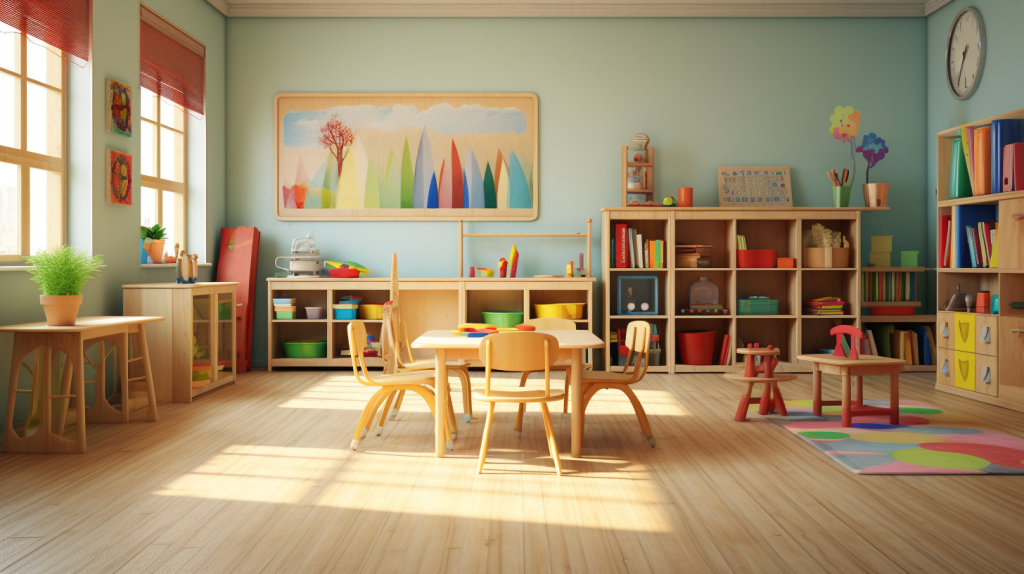
Montessori classrooms should offer an environment carefully organized with materials easily accessible to children. Each material should be arranged for independent use, and classroom spaces should be kept open and orderly.
2. Freedom and Responsibility
Children should be provided an environment that allows them the freedom to guide their own learning processes. However, this freedom comes with a sense of responsibility. Children should develop skills to use their freedom responsibly by engaging in daily tasks like organizing materials, cleaning, and sharing.
3. Mixed Age Groups
Montessori classes often cater to mixed age groups. This facilitates learning from each other, developing social skills, and enhancing a sense of solidarity among children.
4. The Role of the Teacher
Montessori teachers take on a guiding role. While mentoring children, they consider their interests and needs to create individual learning plans. The teacher remains a quiet, observant presence in the classroom.
5. Natural Materials and Proximity to Nature
Natural materials and the integration of nature into learning are essential in Montessori classrooms. Using wood, fabric, stone, and other natural elements enriches children’s sensory experiences and provides a natural learning environment.
6. Concentrated Attention Processes
Montessori materials are often focused on a specific skill or subject. This allows children to concentrate their attention, learn in-depth, and progress at their own pace.
7. Quiet and Calm Environment
Montessori classrooms are typically quiet, calm, and focused, aiding children in concentrating more on their internal thought processes.
8. Art and Music Opportunities
Art and music play a significant role in Montessori classrooms. Children should be provided opportunities to express their creativity and explore their interests in these areas.
An ideal Montessori classroom offers an environment where children can explore their freedoms, responsibilities, and individual potentials. A classroom where every detail is thoughtfully aligned with children’s development reflects the core principles of Montessori education, offering a high-quality learning experience.
“How to Plan a Montessori Room?” Click to read the article titled.


